












G2 Ocean to Expand and Add Sustainability Features to Open Hatch Cargo
Norway-based G2 Ocean, which was established in 2017 focusing on the open hatch segment, reports it has placed orders for six additional vessels in its growth program while also working to incorporate elements of sustainability into its fleet. The six new ships will be future-fuel ready, allowing for alternatives such as ammonia or methanol, while later this year, it will install its first wind-propulsion system on one of its general cargo ships.
The new ships will be built by China’s New Dayang Shipbuilding Co. in Yangzhou, with delivery starting in 2029. They will have a deadweight capacity of 65,400 tons with eight open hatch cargo holds and tween decks in the cargo holds, enabling mixed cargo intake. There will also be two gantry cranes and a total cargo capacity of 79,400 cubic meters.
Two of the new vessels will be owned by Grieg Maritime, one of the partners along with Gearbulk that established G2 Ocean. The other four vessels will be owned by Seaspan and on bareboat charters to Gearbulk.
The companies report that the addition of six new gantry crane open hatch vessels enhances G2 Ocean's operational flexibility by bridging the gap between its larger 72,000 dwt gantry vessels and smaller vessels ranging from 36,000 to 55,000 dwt. These investments are in addition to the delivery of 10 newbuildings, each with a deadweight of 82,300 tonnes, to G2 Ocean’s fleet between 2026 and 2029.
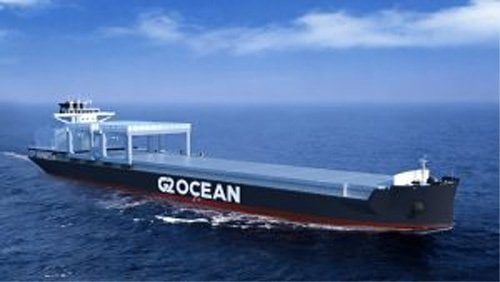
The new vessels, while being future-fuel ready, will also fill a critical gap between the large vessels and smaller classes (G2 Ocean)
Its current fleet consists of approximately 125 Open Hatch and Bulk vessels ranging in size from 23,500 to 73,000 deadweight tons. The first new of the 82,300 dwt vessels, Star Norge, was delivered in January 2026. The combined investments reflect a long-term commitment by G2 Ocean’s shareholders and pool participants, Gearbulk and Grieg Maritime Group, to support the company’s growth ambitions.

that matters most
Get the latest maritime news delivered to your inbox daily.
In addition to incorporating future fuel capabilities into its future newbuilds, the company is encouraging participants to upgrade existing fleets. As a first step, it reports that the 49,924 dwt general cargo vessel, Star Kirkenes, will be equipped with AirWing 20 jet sails, an advanced wind?assisted propulsion system. The vessel, which is 209 meters (229 feet) in length, was built in 2009 and is registered in Norway.
The installation is scheduled for late 2026 or early 2027, with the potential to expand the technology to other vessels within the fleet. The jet sails are expected to reduce fuel consumption and contribute to lower emissions, but they will not interfere with cargo operations or capacity.
Content Original Link:
" target="_blank">